Astigmatism

Astigmatism is a common refractive eye problem that can make your vision blurry or distorted. It happens when your cornea (the transparent front of your eye) or lens (an inner part of your eye that helps the eye focus) has a different shape than normal.
The only way to know if you have astigmatism is to have an eye exam. Eyeglasses or contact lenses can help you see better — and some people may undergo surgery to correct their astigmatism.
What are the symptoms of astigmatism?
The most common symptoms of astigmatism are:
- Blurry vision
- Needing to squint to see clearly
- Headaches
- Eye fatique
- Difficulty seeing in the evening
- If you have mild astigmatism, you may not notice any symptoms. That's why it's important to have regular eye exams – your ophthalmologist can help make sure you see as clearly as possible. This is especially true for children, who may be less likely to realize that their eyesight is not normal.
What causes astigmatism?
Astigmatism occurs when your cornea or lens is shaped differently than normal. This shape causes light to bend differently as it enters your eye, causing a refractive error.
It is not known what causes astigmatism and there is no way to prevent it. Some people are born with astigmatism, but many people develop it as children or young adults. Some people may also develop astigmatism after an eye injury or eye surgery.
How will my ophthalmologist check for astigmatism?
Ophthalmologists may check for astigmatism as part of an eye exam. The test is simple and painless.
Regular eye exams
Both children and adults may not notice vision problems or changes that occur gradually.
Children and adolescents
The pediatrician will perform relatively simple tests to check the health of your child's eyes at birth, between 6 and 12 months, and between 12 and 36 months. A more thorough check can be performed by the ophthalmologist if necessary.
A regular examination can be performed, it is useful to have it performed by the ophthalmologist.
Recommended eye exams should take place
- At least once between the ages of 3 and 5
- Before kindergarten, between the age of 5 and 6
- Every year until the end of middle school
Adults
The American Academy of Ophthalmology recommends that healthy adults with no known vision problems or eye disease undergo a complete eye examination according to the following schedule:
- At least once between the ages of 20 and 29
- At least twice between the ages of 30 and 39
- Every 2 to 4 years from 40 to 54 years old
- Every one to three years between the ages of 55 and 64
- Every 1 to 2 years after the age of 65
If you have diabetes, a family history of eye disease, high blood pressure, or other risks of heart or vascular disease, you'll likely need more regular eye exams. You'll also likely need more regular checkups if you already have prescription glasses or contact lenses, or if you've had surgery to correct vision.
What is the treatment for astigmatism?
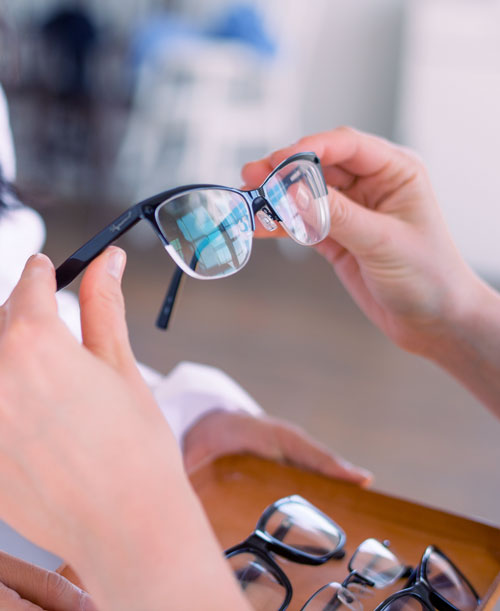
The most common treatments for astigmatism are eyeglasses or contact lenses. Your ophthalmologist will prescribe the right lenses to help you see as clearly as possible.
Doctors may also use surgery to treat astigmatism. The surgery changes the shape of your cornea so that it can properly focus light.
If your astigmatism is mild, you may not need treatment. Your eye doctor can help you figure out if you need treatment and what type of treatment is best for you.
For information on astigmatism correction surgery click here

Personalized Servises for your Eyesight